Beyond the Tech Hype: How Corporate Africa is Engineering AI Workforce Readiness

The conversation around artificial intelligence often centres on the technology itself. We marvel at large language models. We debate processing power and automated pipelines. Yet the true battleground for business survival is entirely human.
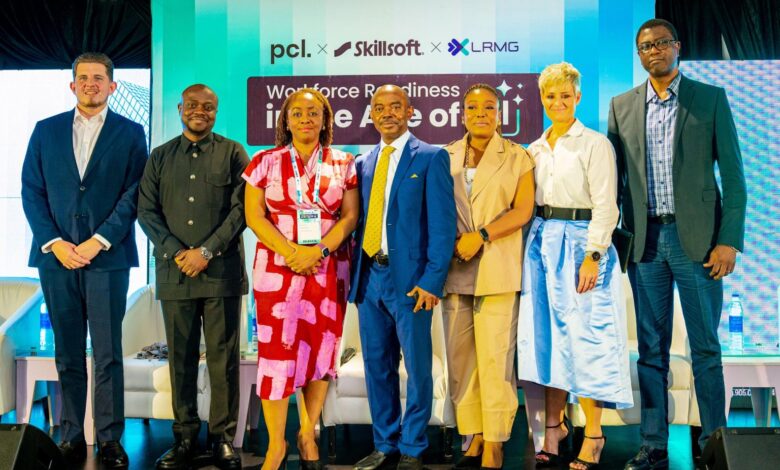
Corporate leaders recently gathered at the Radisson Blu Anchorage Hotel in Lagos to address this exact reality. The exclusive executive forum brought together CEOs and top human resource leaders. It was hosted by Phillips Consulting in collaboration with Skillsoft and Pan African partner LRMG. The central theme focused on workforce readiness in the age of artificial intelligence. It quickly became clear that the biggest barrier to adoption is not the software. The real challenge is organisational structure and human adaptation.
Confronting the Enterprise Architecture Flaw
Many organizations face immediate operational hurdles when deploying new technology. Sally Acton from LRMG introduced a striking perspective on this issue. She argued that modern disruption merely exposes foundational gaps in historical business design. Many companies were built by accident rather than by strategic intention over several decades.
To bridge these vulnerabilities, she presented a clear workforce framework.
Leaders must address these internal structures before investing heavily in machine learning tools. Technology without corporate clarity fails to deliver actual enterprise value. The core question for modern companies is simple. Are our teams structured to learn rapidly or designed to lose market share?
A Strategy for Enterprise Survival
Workforce preparation is no longer just an HR initiative. It is a fundamental survival mandate for the entire corporation.
Temi Dalley of Sterling Financial Holdings emphasised that artificial intelligence replaces repetitive tasks instead of actual individuals. Millions of new corporate roles will emerge globally by the turn of the decade. Succeeding in this landscape requires a complete shift in how we measure employee performance. Static metrics must give way to deep skills intelligence and internal talent mobility.
Organizations must establish environments of psychological safety where employees feel secure experimenting with automated processes. A practical case study came from Consolidated Bank Ghana. John Opata outlined their six-year workforce transformation journey. By utilising advanced learning management systems, the institution built a resilient learning culture. Their experience proves that long-term capability construction requires sustained partnership and strategic patience.
“The shelf life of professional skills is now measured in months rather than years.”
Redefining the Modern Job Description
The traditional corporate habit of matching employees to fixed organisational charts is officially dead. Business requirements evolve too quickly for annual talent assessments to remain useful.
Ejemen Okojie from IHS Towers noted that modern enterprises operate in a continuous state of readiness gaps. The future belongs to workers who combine analytical capabilities with strong emotional intelligence. The rise of automated digital colleagues means roles must be actively dismantled and rebuilt. Dr Joshua Ademuwagun of Pernod Ricard Nigeria outlined a practical method for this structural transition.
Employees must shift their focus from basic task execution to higher level system orchestration. This evolution depends entirely on disciplined change management and robust ethical governance frameworks.
Data Readiness and the New Leadership Mandate
Many organisations are simply not moving fast enough to leverage modern technology effectively. The bottleneck rarely stems from engineering limitations.
The primary constraint lies in fragmented data architectures. Artificial intelligence requires connected and trusted data foundations to deliver meaningful business insights. Sally Acton advised leaders to focus on a few high impact use cases rather than chasing every tech trend.
At the same time, companies must cultivate human-centred capabilities. Yemi Faseun from YF Talent Partners highlighted critical thinking and empathetic leadership as the ultimate competitive differentiators. Leadership responsibility must cascade down through every management layer to guide teams through rapid operational shifts. Older executives must also engage in intentional mentorship to prepare the next generation of professionals.
Engineering the Adaptive Enterprise
True competitive advantage has shifted away from mere scale or cost efficiency. Modern corporate success depends entirely on systemic agility.
Billy Gager from Skillsoft introduced the concept of the Adaptive Enterprise to address this shifting reality. This model balances four core pillars: people, process, technology, and culture.
| Dimension | Core Focus | Operational Requirement |
| People | Continuous Upskilling | Prioritising critical thinking over basic technical execution |
| Process | Data Driven Decisions | Accelerating response times through automated workflows |
| Technology | Skills Intelligence | Maintaining clear visibility across the talent landscape |
| Culture | Systemic Trust | Securing executive buy-in to drive organisational change |
Organisations must establish a continuous cycle of assessment, alignment, activation, and amplification. The winners in this new economy will not simply be the ones with the largest software budgets. Victory belongs to enterprises with the fastest insights and the agility to act on them immediately.
Closing the forum, Foluso Phillips of Phillips Consulting brought the conversation back to execution. Strategy design represents only half the corporate battle. True operational success lives and dies with human behaviour, training, and workplace culture.